
CTF Release Destinations
Lucas County CTF is a community-based correctional facility tied to Common Pleas Court. It is not Lucas County Corrections Center and does not use the sheriff's booking summary as its release roster. The current program description covers specified adult court referrals, including felony sentences of up to six months, and a work-release component. The court order defines the sanction. CTF administers the residential program.
A successful completion may end residential custody and return the person to the community. It may be followed by probation or another form of community control. Those terms mean court supervision in the community, not ODRC parole unless an ODRC record expressly says so. A violation or new judicial order can instead move the resident to LCCC, CCNO, state prison, or another sanction. A transport record is evidence of continued custody, not release.
Confirm a CTF Release
No public CTF release feed was verified. The strongest path joins the sentencing case to direct program confirmation. Lucas felony cases belong in Common Pleas General Division. Municipal cases use Toledo, Maumee, Oregon, or Sylvania Municipal Court as appropriate. The official Lucas Online Dockets landing page routes General Division users through its current portal transition.
- Identify the court, case number, and date of the CTF placement.
- Read the sentence and all later journal entries for completion, modification, violation, transport, or termination language.
- Contact CTF and ask for the public confirmation of residential discharge or the name of a receiving custodian.
- If custody moved, search the receiving jail or ODRC. Do not keep searching CTF for the later release.
- Request the filed court entry or a narrowly described facility record when a dated copy is needed.
Use the Lucas County released-inmate lookup to follow county, state, and federal custody paths. Ohio VINE may report a participating jail or ODRC event, but it is not a CTF sentence record and should not replace the case docket.
CTF Release Contact
Use the current court program page for CTF. Older county documents contain legacy addresses and numbers for related programs, so they should not lead a current contact attempt. Give staff enough information to identify the resident and court placement without asking for protected treatment details.
Lucas County Correctional Treatment Facility
2001 East Central Avenue
Toledo, OH 43608
Phone: 419-725-6228
Authority: Lucas County Common Pleas Court
The contact was checked July 31, 2026. The official CTF and Work Release page is the source for current routing.
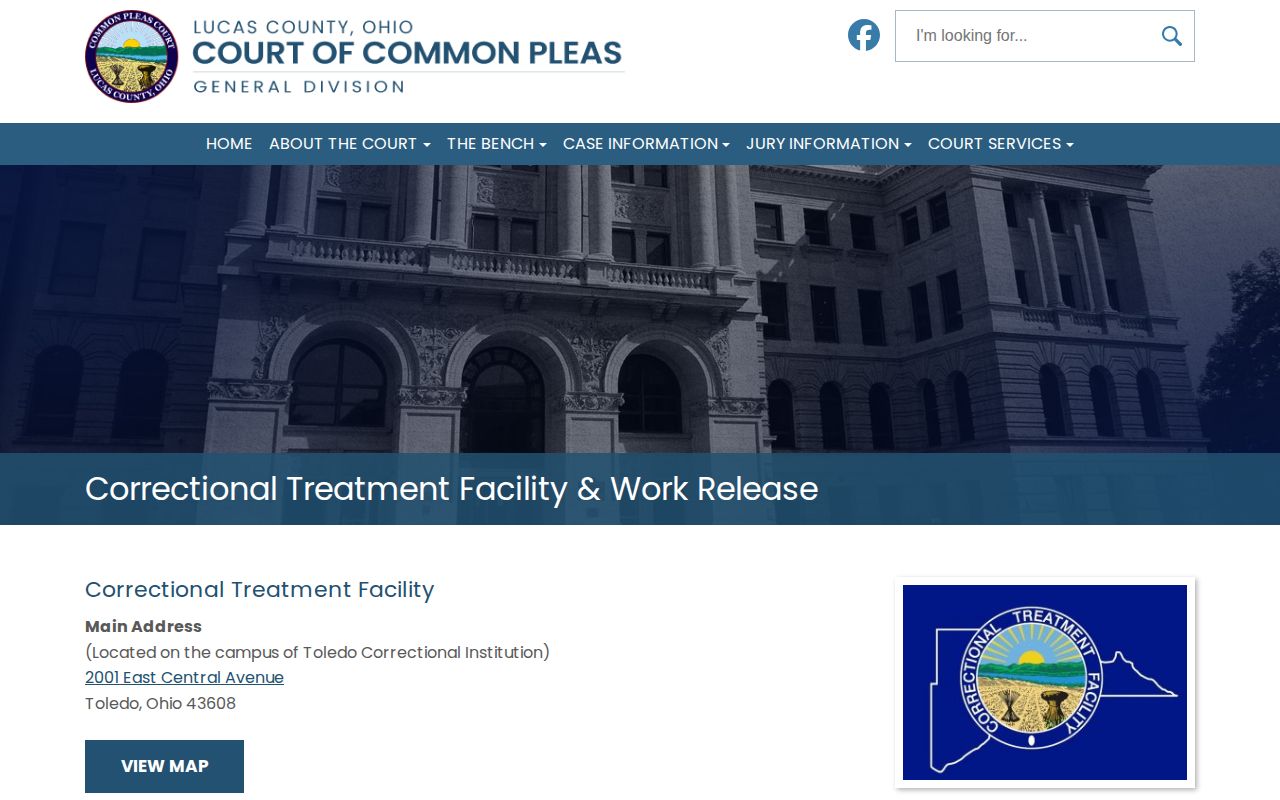
The page establishes the facility and current program contact. The person's own court docket remains necessary to establish the actual sentence and discharge.
Lucas CTF Placement Terms
The CTF's role differs from pretrial jail detention. A court refers the resident to a structured community-based correctional placement. Case managers can connect residents with essential and social-service resources, and the program includes work-release activity. The existence of outside activity does not mean the resident has been discharged. Program custody continues until the controlling authority ends or changes it.
- Residential discharge
- The formal end of the CTF residential placement.
- Community control
- A court sanction served under conditions in the community.
- Good days
- The CTF term for credit that may permit early release; no public calculation formula is posted.
- Transfer
- Movement to a new custodian or sanction while legal control continues.
The public page says residents may earn good days, but it provides no rate, cap, or calculation method. Obtain the current adjusted date from CTF and the court. State-prison earned-credit law does not automatically apply to this local program.
CTF Discharge Record Request
A focused request asks for the public record of the placement event, not the resident's full treatment or supervision file. Ohio's Public Records Act contains exclusions for probation, parole, community-control-sanction, and post-release-control proceedings. Medical, security, victim, and confidential investigatory material can also be withheld. A court journal entry is often the clearest public evidence of what the judge ordered.
| Record | Best source |
|---|---|
| Original CTF sentence | Sentencing court docket and filed judgment |
| Residential completion date | CTF, if publicly confirmable |
| Modification or termination | Later court journal entry |
| Transfer destination | CTF or court transport order, then receiving agency |
| Later jail or prison release | Receiving jail records or ODRC |
Include the full name, court, case number, placement date, and exact item requested. If part of a record is withheld, ask for the lawful basis and any separable public part. Do not infer discharge because the public portal returns no match.
Note: A narrow request is easier to route and avoids seeking confidential case-management material that cannot confirm physical release.
CTF Versus State Prison
CTF can serve adults referred in Lucas felony cases, but it is not an ODRC institution. The Ohio felony-term statute supplies statewide sentencing context, while the Lucas court order identifies the actual local sanction. The Ohio felony prison-term provision shown below should not be read as proof that a CTF resident entered state prison.
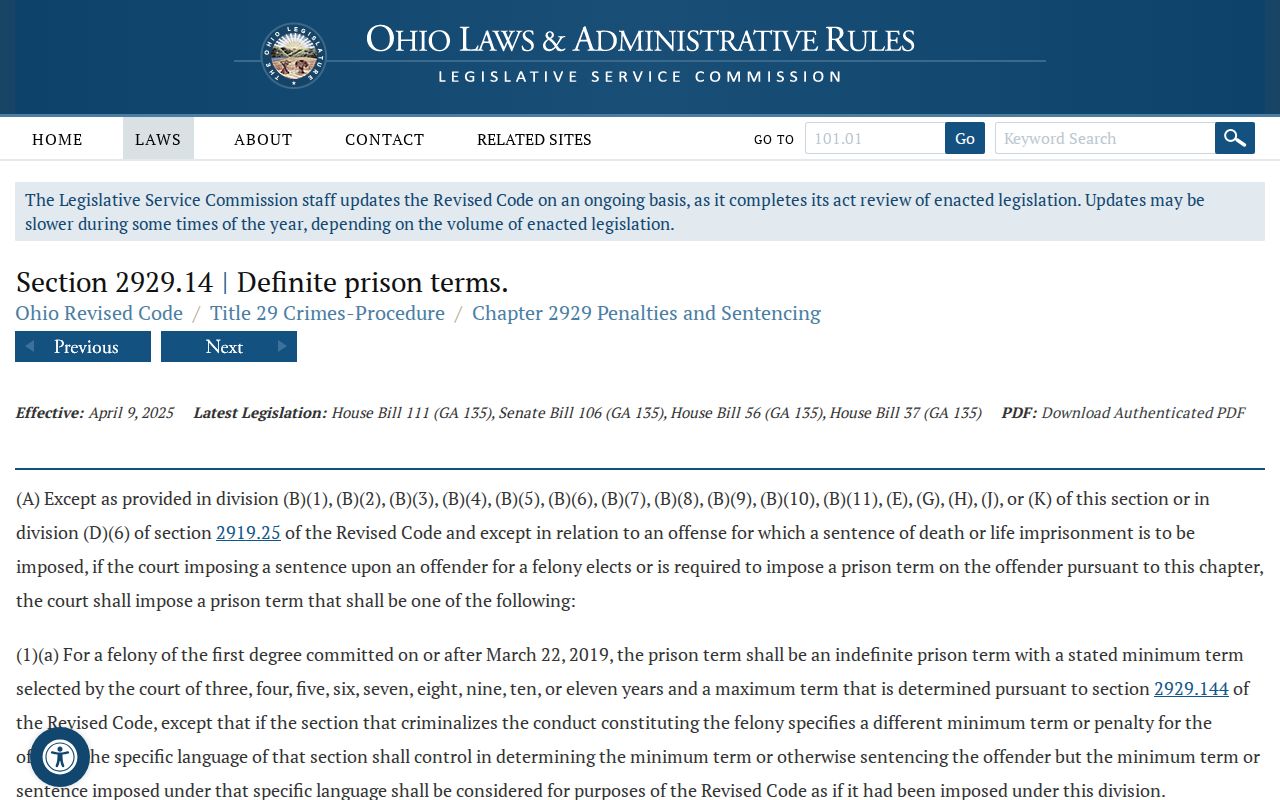
If a later order sends the person to ODRC, the ODRC offender number and institution field become the custody key. If the person completes CTF, the sentencing court and facility remain the better sources.
Toledo CTF Release Scams
The City of Toledo does not own or operate a detention facility, as an Ohio Supreme Court decision has noted. CTF is a Lucas County court-connected facility, not a Toledo city jail. A Toledo Municipal Court case can still send a participant into a county or regional placement, so the court name and custodian must be kept separate.
The Lucas County sheriff separately warns that it does not call, text, or email to demand money for an inmate's bond, release, or program. The warning is not a statement that the sheriff operates CTF. It is a useful safeguard when a caller uses local jail language to demand immediate payment. Check the official scam notice, then verify any legitimate court obligation with the clerk or CTF through published channels.
Lucas CTF Release Evidence
A CTF release check works best as a custody timeline. Begin with the filed sentence that placed the person at the facility. Record the case number, court, placement date, stated term, and jail-time credit. Then review each later journal entry. A violation, modification, earned good-day adjustment, or transport order can change the expected result. Finish with CTF's public confirmation of the residential end date and destination. This sequence distinguishes what the judge ordered from what the facility carried out.
The date alone is not enough. A residential term can end with successful community return, continued community control, movement to a work-release component, or transfer to secure confinement. The wording of the final order matters. “Community control” means court supervision under conditions. It is not an unconditional case end. “Transferred” means another custodian took charge. “Discharged from CTF” may end the residential phase while other terms continue.
When transfer occurs, follow the receiving record. LCCC uses the sheriff's booking summary and records request. CCNO maintains its own regional-jail channel. ODRC uses statewide Offender Search. A federal or immigration handoff requires the named federal agency. Absence from the CTF program after transfer is expected and cannot prove later freedom.
The Lucas court docket can retain the charge, plea, sentence, jail-time credit, sanction changes, warrants, and termination entry after the person leaves CTF. Open the actual filed image where available because short portal captions can omit conditions. If the online system is unclear, request the precise journal entry from the clerk. Avoid requesting the entire confidential case-management or treatment file.
Ohio public-record exclusions are especially relevant to community-control proceedings. A custodian may redact or withhold protected material while still providing a separable public order or basic status fact. Ask for the legal basis when information is withheld and request the remaining public portion. A narrow request for the discharge date, transfer destination, and filed order is stronger than a broad demand.
Check the court named in the placement instead of assuming every CTF case is a Common Pleas felony. Toledo and the other municipal courts maintain their own records. One case can also coexist with another warrant or hold. A discharge order in the placement case does not cancel an unrelated source of custody. Compare the resident's name, case number, dates, and destination across each record. When staff can confirm only that the person is no longer at CTF, ask whether a public destination can be given and then contact that agency. If no destination is available, the court's transport and later docket entries are the next best evidence. This disciplined route avoids turning a program exit into an unsupported claim of release.